
Building Better Homes
How the SAHP is Redefining Social Housing — and Why Kitchens Are at the Heart of It
The UK government has officially opened bidding for the Social and Affordable Homes Programme (SAHP) 2026–2036, unlocking £39 billion of investment into the social housing sector — the largest public housing commitment in a generation.
But the SAHP is not simply about building more homes. - It is about building better ones.
With expectations around durability, safety, sustainability and design quality fundamentally shifting, the next decade will redefine how social housing is designed, delivered and maintained. And at the centre of that shift sits one of the most important spaces in the home:
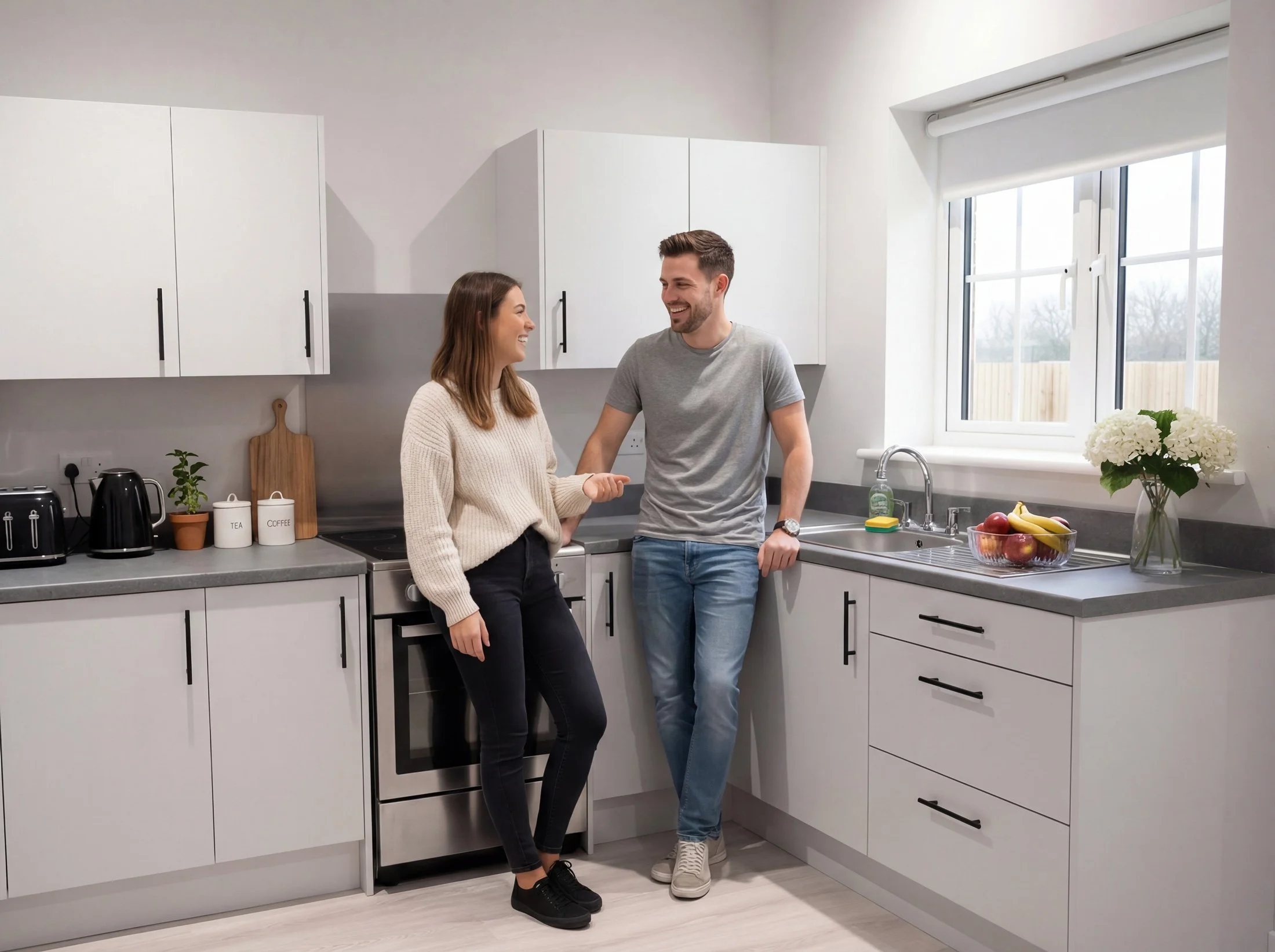
The Kitchen
Kitchens are no longer a finishing detail. They are central to achieving regulatory compliance, resident satisfaction and long-term asset performance. If we want to create homes where residents can truly thrive, we must start with the space that anchors daily life.
A Higher Standard for Social Housing
The UK government has officially opened bidding for the Social and Affordable Homes Programme (SAHP) 2026–2036, unlocking £39 billion of investment into the social housing sector. At least £27 billion will be delivered through Homes England over the next decade, with first grant awards expected from April 2026.
With at least 60% of SAHP-funded homes required to be for social rent, and the Decent Homes Standard (DHS) set to be modernised and extended to 2035, expectations around durability, safety, sustainability and design quality have fundamentally shifted.
The updated DHS will require upgraded facilities, including modern kitchens and bathrooms, improved safety features and stronger energy performance standards. At the same time, landlords must work toward EPC C targets by 2030, while addressing new regulatory requirements under the Building Safety Act and Awaab’s Law.
This creates a dual pressure:
Delivering high-quality kitchens in new SAHP-funded homes
Retrofitting and upgrading existing stock at scale before 2035
For housing associations and councils, kitchen specification is no longer a secondary decision. It is a strategic one.
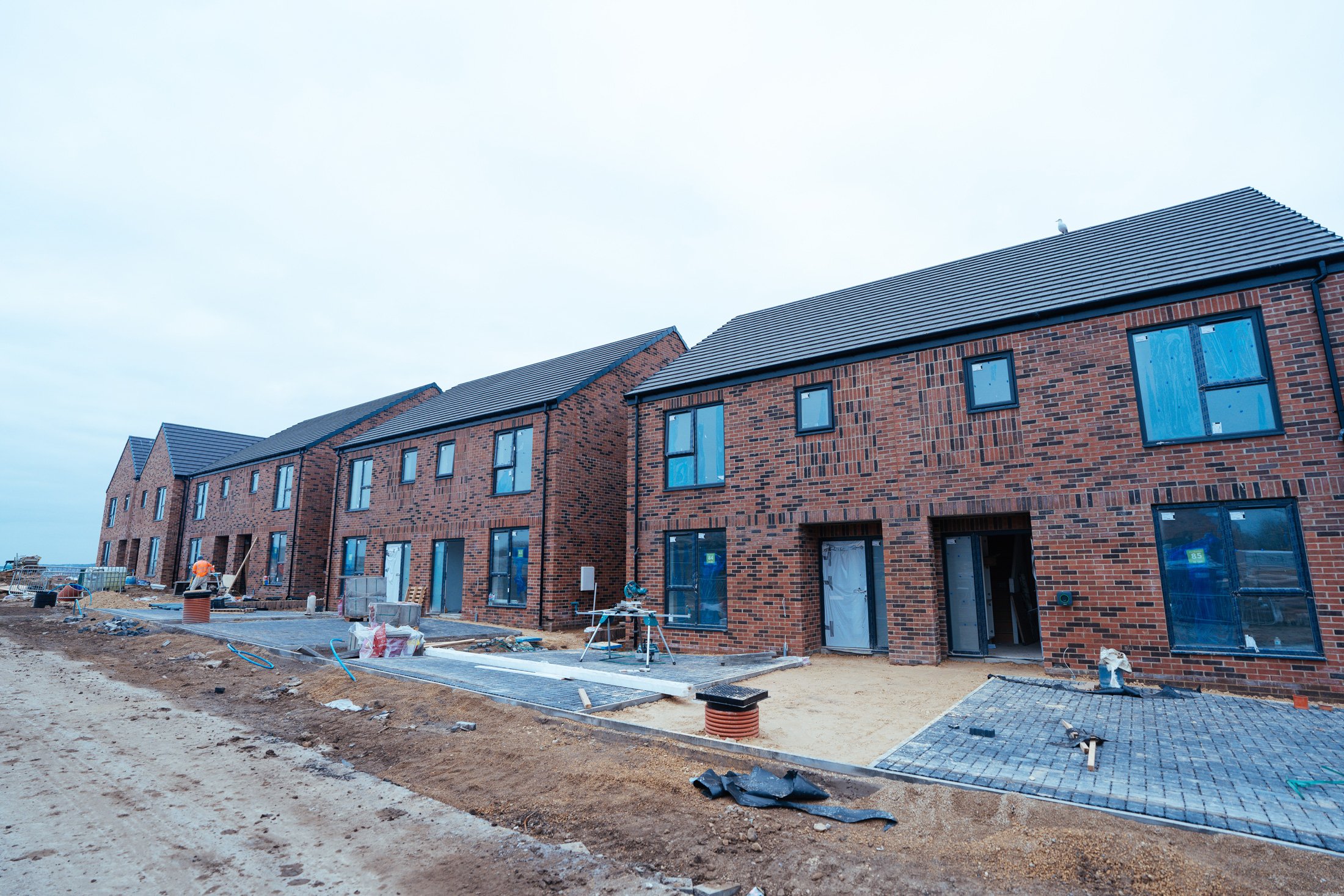
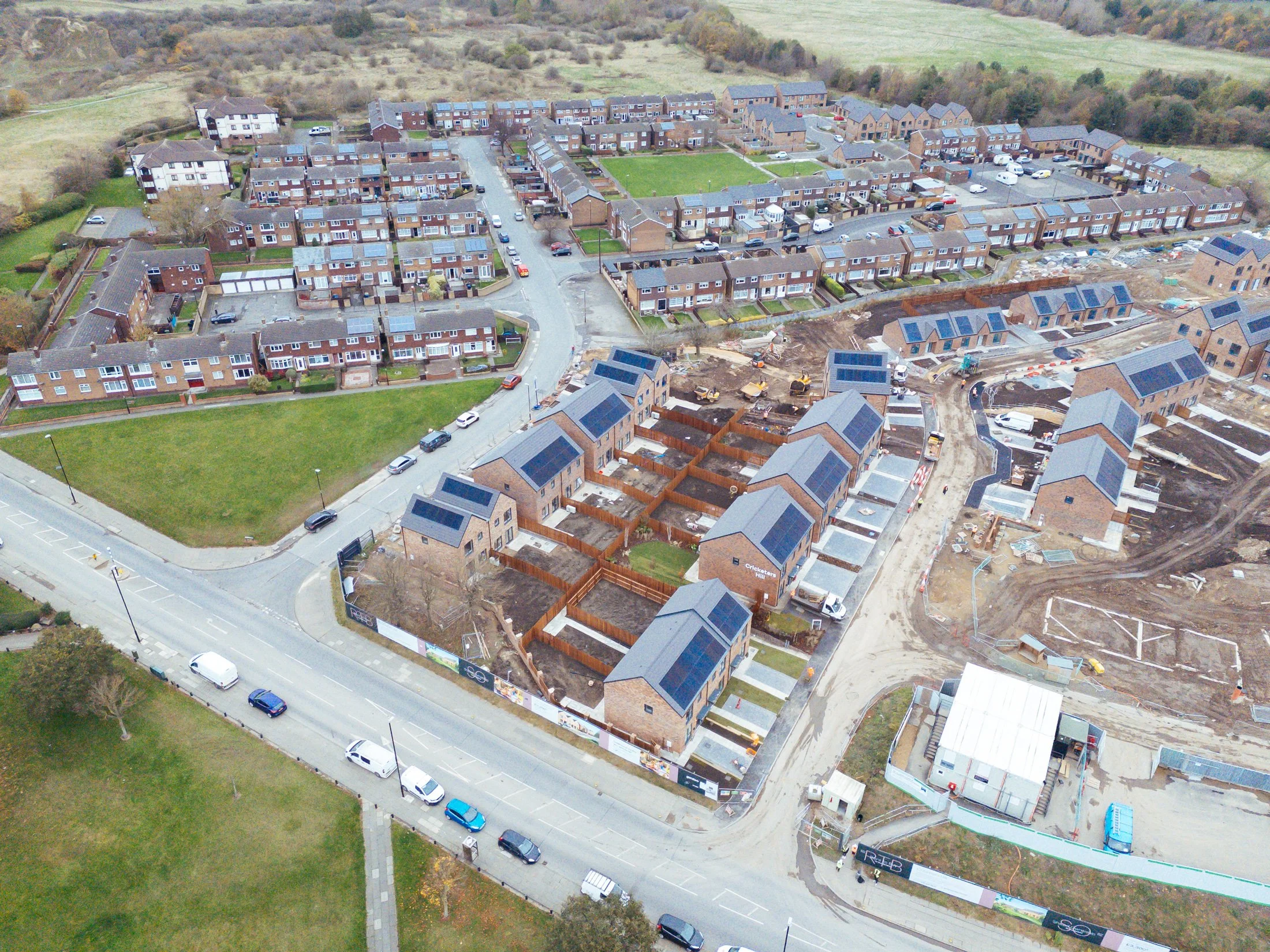
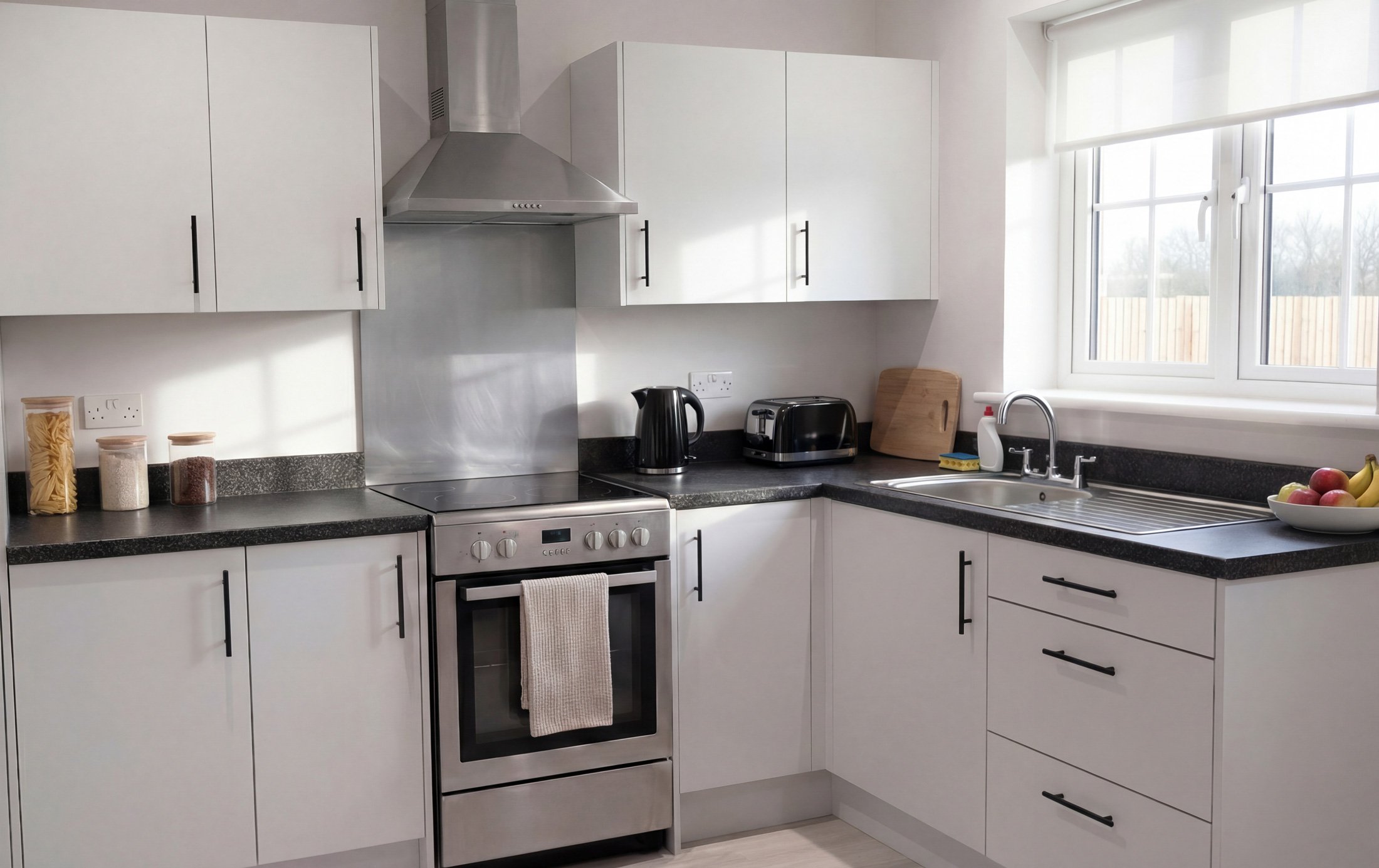
Built for Resilience, Not Replacement
Kitchens in social rent properties must endure heavy daily use, remain safe and compliant, and retain their appearance and functionality over long lifecycles. That means:
Durable, impact-resistant cabinetry
Moisture-resistant and hygienic surfaces
Fire-compliant components
Integrated ventilation and safety features
Energy-efficient appliances and lighting
The shift is clear: kitchens must be built for resilience, not replacement.
Procurement at Pace: Frameworks and Partnerships
To support this scale of delivery, national procurement frameworks such as CHIC, PfH Scotland and LHC K7 are enabling housing providers to access compliant kitchen supply routes. These frameworks prioritise modern, accessible and sustainable design, while accelerating procurement through direct award or mini-competition processes.
The SAHP also introduces Continuous Market Engagement and Strategic Partnership routes, encouraging longer-term collaboration rather than transactional supply.
For housing providers, this means selecting partners who can:
Deliver consistent quality at volume
Provide design flexibility within compliance constraints
Demonstrate sustainability and social value
Maintain manufacturing capacity across multi-year programmes
The next decade will reward strategic alignment over short-term pricing.
Safety, Retrofit and Net Zero
Regulatory reform is driving significant change across kitchen manufacturing and installation.
The Building Safety Act continues to evolve, Awaab’s Law introduces strict timelines for damp and mould remediation, and retrofit works to meet EPC C targets are projected to cost £40–50k per home in many cases.
These pressures directly influence kitchen design and material selection. We are seeing increased demand for:
Moisture-resistant boards and sealed cabinetry
Fire-rated components where required
Induction cooking solutions
LED lighting and low-energy appliances
Recycled and responsibly sourced materials
Product-level carbon transparency
Net-zero and retrofit goals are no longer optional extras — they are embedded within tender documentation and evaluation criteria.
Inclusive Design Is Becoming Standard
The SAHP’s emphasis on social rent and long-term occupancy brings accessibility into sharper focus.
Framework documentation highlights provision for impaired-mobility kitchens, alongside increasing demand for adaptable layouts and smarter storage solutions. In practice, this includes:
Adjustable-height worktops
Accessible corner solutions and pull-out systems
Easy-grip handles and soft-close mechanisms
Clear circulation space
Durable yet calming finishes
Inclusive design is moving from enhancement to expectation.
The Workforce and Capacity Challenge
While the funding pipeline is strong, the sector faces real constraints. Workforce shortages in retrofit and specialist trades remain acute, while material and labour costs continue to place pressure on programme budgets.
For manufacturers and contractors, this means:
Investing in workforce development
Prioritising modular and pre-assembled solutions
Reducing installation time on site
Strengthening supply chain resilience
Efficiency is no longer just commercial advantage — it is essential to delivery.

A Decade of Opportunity
The SAHP establishes a clear 10-year pipeline for affordable and social housing construction. With social rent forming the majority of funded homes, demand for durable, compliant and future-ready kitchens will only grow.
Over the next decade, we expect to see:
Greater emphasis on long warranties and lifecycle value
Stronger evaluation of sustainability credentials
Standardisation of inclusive design principles
Deeper strategic partnerships between housing providers and manufacturers
Building for the Long Term
At WFG, we view this shift as both responsibility and opportunity.
Delivering under the SAHP means more than supplying units. It means working collaboratively with housing associations, councils and developers to design kitchens that meet modernised Decent Homes Standards, integrate safety and energy requirements from the outset, support inclusive living, and withstand intensive use — while delivering measurable social value.
The next generation of social housing must be built to perform for decades.
The kitchen remains the heart of the home — and in the SAHP era, it sits at the heart of social housing transformation.
