
AI in Design
Bringing Large-Scale Projects to Life at WFG
AI is no longer a “one day” technology — it is already transforming the design and specification process across the interiors industry, particularly on fast-moving, high-volume developments. At Woodland Furniture Group (WFG), we use AI as a supporting tool within our design and marketing workflow to help bring large-scale projects to life with greater clarity, speed, and confidence where it adds the most value.
From social housing schemes to build-to-rent developments in busy cities and newly renovated student accommodation, the goal is never to replace the designer’s experience or technical expertise. Instead, AI enhances how ideas are explored, visualised, and approved — strengthening decision-making at every stage.
Supporting Complex, Large-Scale Developments
On large developments, the biggest challenge is often not the design itself, but the complexity surrounding it — multiple unit types, varied stakeholder groups, tight programmes, and strict budget controls.
AI helps streamline the early and decision-critical stages of this process by producing targeted, realistic visual concepts more efficiently for key unit types and decision points. Layouts, finishes, colourways, and styling approaches can be explored and refined before committing time and resource to full rendering workflows.
For clients, this means:
Clearer visual understanding of design intent
Can support faster review and approval cycles
More confident decision-making across teams
Greater consistency across multiple unit types
Compliance with housing and safety standards as part of the wider CAD/specification review process
This is particularly valuable on city-centre BTR projects and refurbishment programmes, where time pressures and stakeholder involvement can slow traditional design communication processes.
From Concept to Visual Clarity
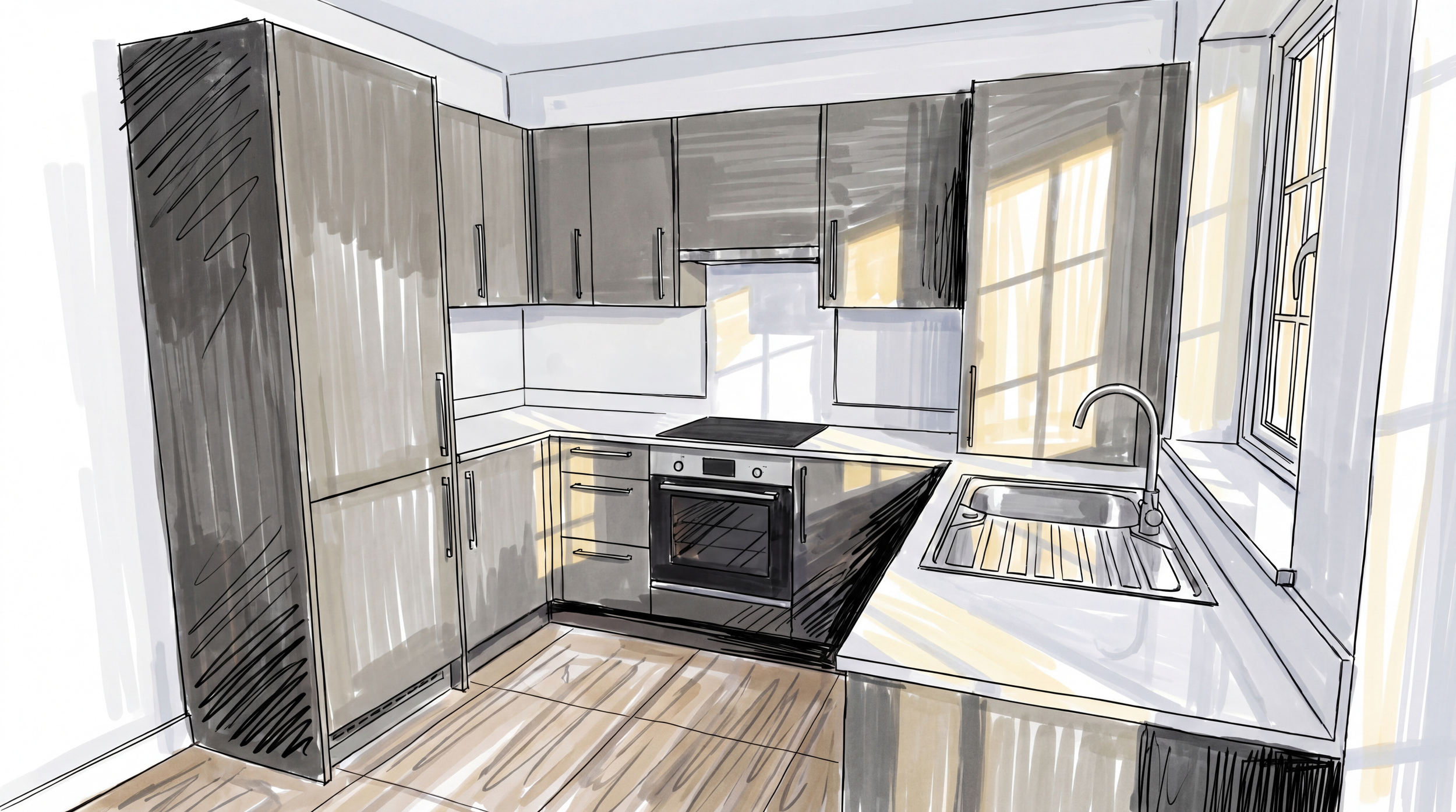
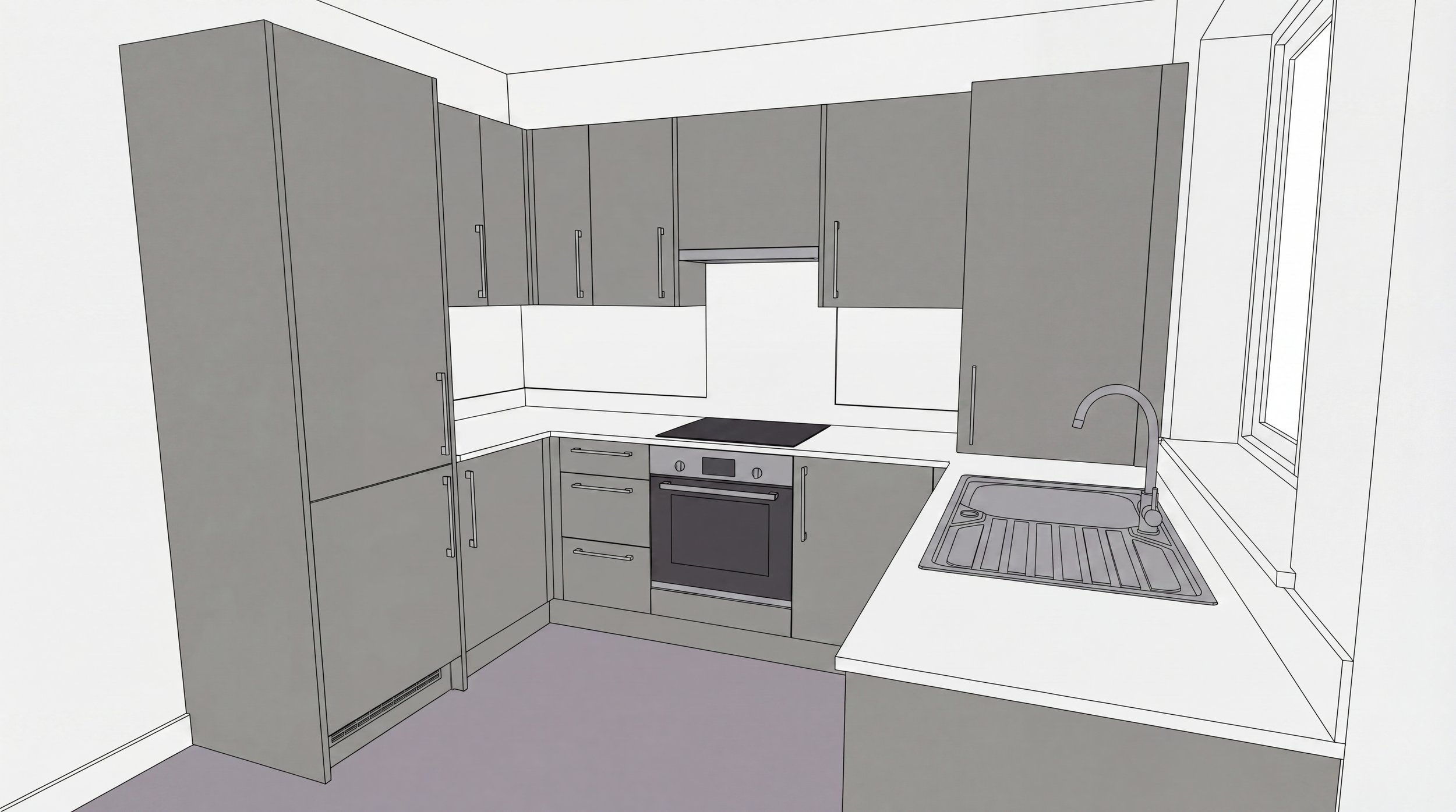
A typical AI-supported workflow at WFG begins with an initial sketch or early design intent. This is developed into a structured CAD layout to ensure dimensional accuracy and buildability — a critical step in maintaining technical integrity and ensuring technical oversight and sign-off.
Once the technical foundation is established, AI is used to generate select photorealistic imagery that illustrates how kitchens, bathrooms, vanity areas, or key communal spaces are intended to look. These visuals capture:
Material textures
Lighting conditions
Scale and proportion
Spatial flow and layout
Overall design atmosphere
In some cases, this can be extended into short, illustrative walkthrough-style video clips, helping clients and stakeholders better understand how a finished space may feel in reality.
Enhancing, Not Replacing, Design Expertise
At WFG, AI is used thoughtfully and selectively. It is a tool within a broader design and manufacturing process — not a substitute for experience, specification knowledge, or technical compliance.

Every concept remains grounded in:
Real-world material availability
Buildability within manufacturing constraints
Compliance with housing and safety standards as part of the wider CAD/specification review process
Budget alignment
By combining structured CAD design, manufacturing expertise, and AI-assisted visualisation, we are able to communicate ideas faster while maintaining full technical control.
A Smarter Way to Communicate at Scale
For WFG, the value of AI is not in generating endless variations — it is in using it thoughtfully and selectively to improve how we communicate design intent, support faster decision-making, and deliver better outcomes across complex programmes.
AI is not a replacement for design. It is a tool that supports it — helping teams move faster, communicate more clearly, and deliver kitchens and interiors that meet the expectations of modern, high-volume development.
AI isn’t the tool of tomorrow — it’s the tool of today. And when used strategically, it helps us deliver better design outcomes at scale.
